

Introduction
If you are wondeing how to build a successful freelance carrer,the idea of being your own boss, setting your own schedule, and working on projects you genuinely enjoy has made freelancing an exciting career choice for many people. Unlike traditional jobs, freelancing gives individuals the freedom to decide when, where, and how they want to work. Whether you are a writer, designer, developer, marketer, or someone with a unique skill to offer, freelancing creates opportunities to build a career based on your strengths and interests.
One of the biggest reasons behind the growing popularity of freelancing is flexibility. People today value work-life balance and want careers that allow them to pursue personal goals alongside professional growth. Freelancing also offers the chance to work with different clients, gain diverse experiences, and create multiple sources of income. Although the journey comes with challenges, it can be highly rewarding for those willing to stay committed and continue learning.Whether you are a student, a working professional, or someone considering a career change, understanding the fundamentals of freelancing can help you build a successful freelance career that is both sustainable and rewarding.
Why More People Are Choosing Freelancing Today
Freelancing has become increasingly popular because it offers something that many traditional jobs cannot: independence and flexibility. Instead of following a fixed schedule, freelancers have the opportunity to manage their own time and choose projects that align with their interests and expertise.
Another reason people are drawn to freelancing is the ability to turn existing skills into income-generating opportunities. Students can gain practical experience while earning money, professionals can explore additional career paths, and creative individuals can transform their passions into successful businesses. The rise of remote work has also made it easier than ever to connect with clients from different industries and locations.
For many individuals, freelancing is not only about financial benefits. It is also about having control over career decisions, continuously learning new skills, and creating a professional journey that reflects personal goals and values. This combination of freedom, growth, and flexibility explains why freelancing continues to attract people from all walks of life.

Essential Skills Needed Build A Successful Freelance Career
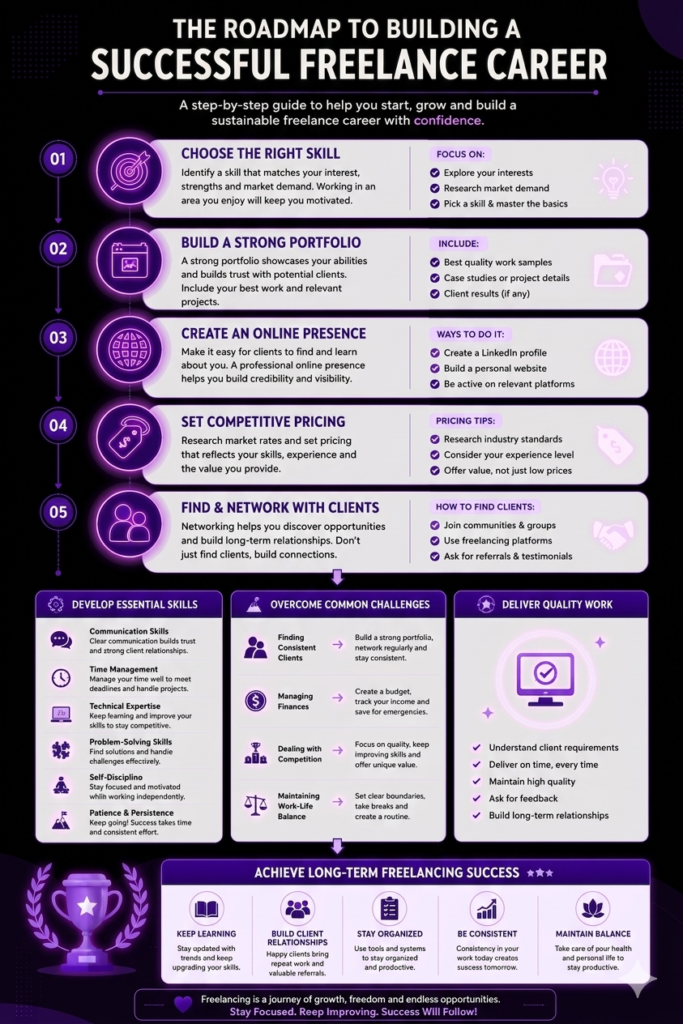
To build a successful freelance career you need to more than technical expertise. Freelancers often manage multiple responsibilities, including client communication, project deadlines, and maintaining consistent work quality. Developing the right skills can make this journey more manageable and rewarding.
Communication Skills
Strong communication skills are essential for understanding client expectations and building positive professional relationships. Clear communication helps avoid misunderstandings, ensures smooth project execution, and creates trust between freelancers and clients.
Time Management
Freelancers are responsible for organizing their own schedules. Effective time management allows individuals to prioritize tasks, handle multiple projects, and consistently meet deadlines while maintaining a healthy work routine.
Technical Expertise
Having strong knowledge and expertise in your chosen field is important for delivering high-quality work. Since industries evolve constantly, freelancers should continue improving their skills to remain competitive and relevant.
Problem-Solving Skills
Every project comes with its own set of challenges. The ability to think critically and find practical solutions enables freelancers to meet client needs effectively and deliver successful outcomes.
Self-Discipline
Freelancers are responsible for organizing their own schedules. Effective time management allows individuals to prioritize tasks, handle multiple projects, and consistently meet deadlines while maintaining a healthy work routine.
Patience and Persistence
Building a freelance career takes time. Staying patient and continuing to improve, even during challenging periods, can lead to long-term success.

Self-Discipline overwhelming at first, but taking one step at a time can simplify the process and create a strong foundation for future growth.
Steps a freelance career
The first step is identifying a skill that matches your interests and strengths. Choosing work that you genuinely enjoy can increase motivation and encourage continuous improvement.
Build a Strong Portfolio
A portfolio showcases your abilities and helps potential clients understand the quality of your work. Even beginners can create sample projects to demonstrate their expertise and professionalism.
Create an Online Presence
Having a professional online presence makes it easier for clients to discover your services. Platforms such as LinkedIn and personal websites provide opportunities to showcase achievements, share work samples, and establish credibility.
Set Competitive Pricing
Determining the right pricing strategy is important for attracting clients while ensuring your work is valued appropriately. Researching industry standards and considering your level of experience can help establish fair rates.
Network and Find Clients
Building professional relationships plays a significant role in freelance success. Networking through onlinecommunities, referrals, social media platforms, and freelancing websites can lead to valuable opportunities and long-term collaborations.
It is important to remember that growth takes time. Every project completed and every client interaction contributes to building experience and confidence. Staying consistent and maintaining a positive attitude can make a significant difference throughout the journey.
Common Challenges Freelancers Face and How to Overcome Them for a successful freelance career
While freelancing offers flexibility and independence, it also presents certain challenges that require planning and resilience.
Finding Consistent Clients
Maintaining a steady flow of projects can be difficult, especially during the early stages of a freelance career. Building a strong portfolio, networking actively, and maintaining an online presence can improve visibility and attract new clients.
Managing Finances Effectively
Unlike traditional employment, freelance income may vary from month to month. Creating a budget, tracking expenses, and setting aside savings can help maintain financial stability and reduce stress.
Dealing with Competition
The freelance market can be highly competitive. Focusing on delivering quality work, improving skills, and providing excellent client experiences can help freelancers stand out.
Maintaining Work-Life Balance
The flexibility of freelancing sometimes makes it difficult to separate work from personal life. Establishing clear boundaries, creating a schedule, and taking regular breaks can support productivity and overall well-being.Facing challenges is a natural part of any career path. Viewing obstacles as opportunities for growth can help you build a successful freelance career despite challenges and setbacks.

Tips for Long-Term Success in Freelancing
Long-term success in freelancing is built through continuous growth, professionalism, and consistency.
Continue Learning and Improving Skills
Industries continue to evolve, making ongoing learning essential. Exploring new tools, techniques, and industry trends can improve expertise and create additional opportunities.
Build Strong Client Relationships
Positive client relationships often lead to repeat projects and referrals. Being reliable, communicating effectively, and consistently delivering quality work can strengthen professional connections.
Stay Organized and Professional
Managing deadlines, project details, and communication efficiently contributes to a strong professional reputation. Staying organized helps reduce stress and improve productivity.
Be Consistent and Patient
Success rarely happens immediately. There may be setbacks and periods of uncertainty, but remaining patient and continuing to work toward long-term goals is essential.
Maintain a Healthy Work-Life Balance
Taking care of physical and mental well-being is equally important. Setting boundaries and making time for personal activities can prevent burnout and support long-term satisfaction.
Freelancing is a journey of continuous learning. Those who remain adaptable, focused, and committed to growth are more likely to build sustainable careers.
Conclusion
To build a successful freelance career requires dedication, patience, and a willingness to keep learning. While freelancing offers the freedom to work independently and choose projects that align with personal interests, it also demands responsibility and persistence.
Challenges are a natural part of the process, but each experience provides valuable lessons that contribute to professional growth. Staying consistent, improving skills, and maintaining positive client relationships can help freelancers move closer to their goals.
Whether you are just beginning your freelance journey or looking to strengthen your existing career, remember that every successful freelancer started with a single step. With determination, continuous improvement, and confidence in your abilities, freelancing can become a rewarding and fulfilling career path.